
Science & manufacturing

One clear journey, from idea to ingredient.

Follow how a peptide moves through six connected stages: design, synthesis, isolation, quality control, formulation and supply.

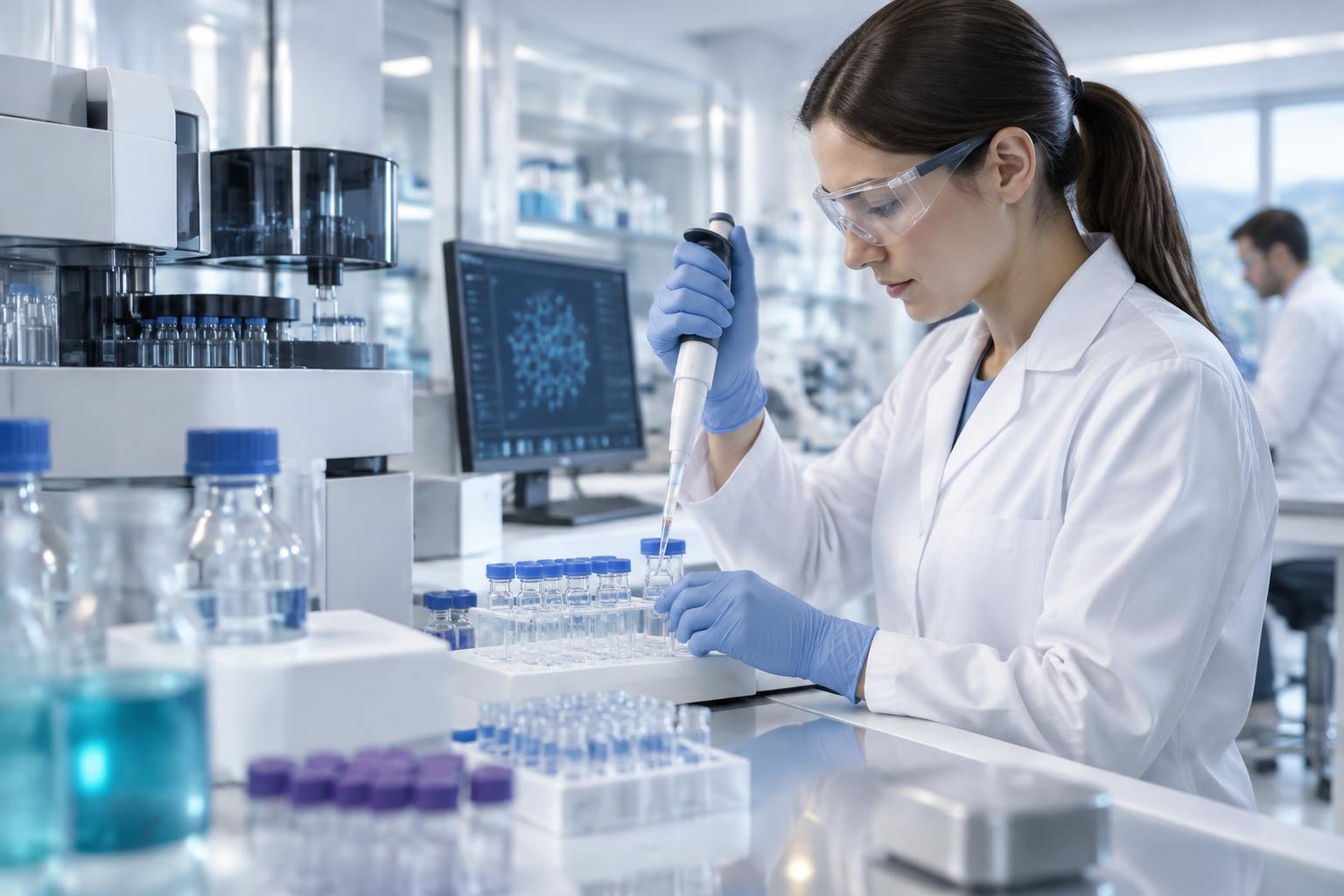
Active Peptide research laboratory

Start here

Six stages. One connected process.

  1. 01

    Research & molecular design

  2. 02

    Liquid-phase synthesis

  3. 03

    Isolation & ingredient preparation

  4. 04

    Batch quality control

  5. 05

    Formulation & application

  6. 06

    Documentation & supply

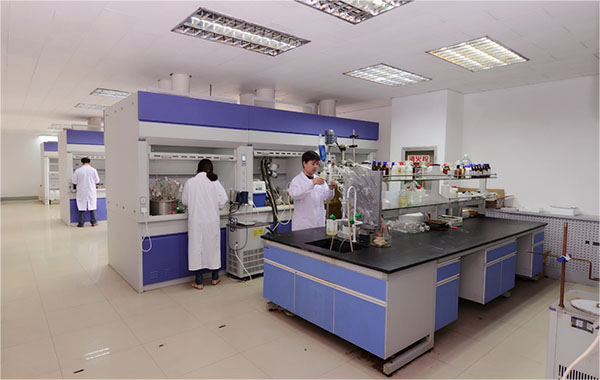
  1. Research in the Active Peptide laboratoryStage 01

    Stage 01

    Research & molecular design

    We start with the intended cosmetic application, then select and design the peptide architecture.

    Our researchers develop both peptide actives and the routes used to make them. Linear, cyclic and branched architectures are selected for their intended cosmetic applications; evidence and specifications remain product-specific.

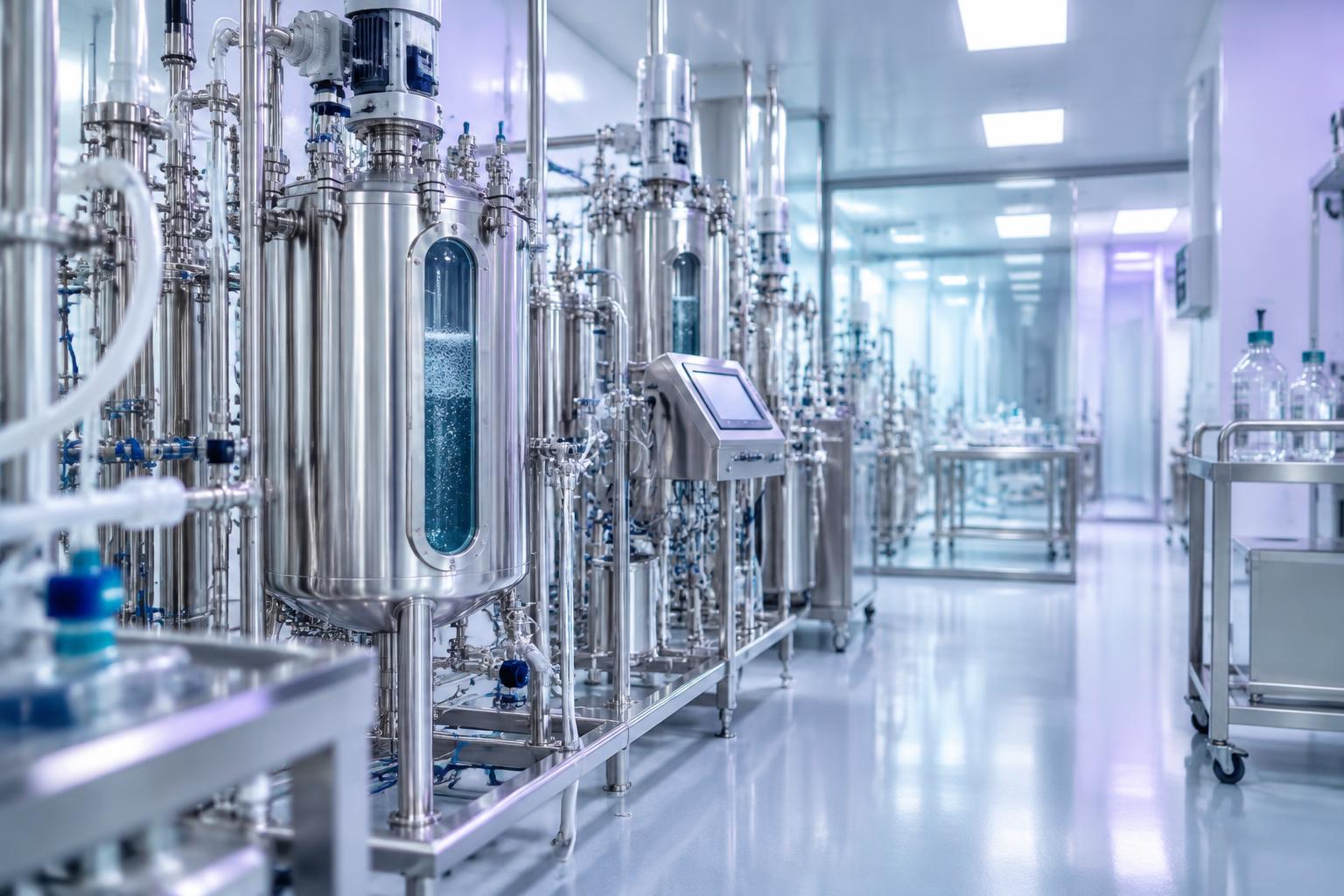
  2. Modern peptide manufacturing laboratoryStage 02

    Stage 02

    Liquid-phase synthesis

    The amino-acid chain is built in solution using our patented liquid-phase route.

    A peptide is a chain of amino acids joined by peptide bonds. Our patented route builds these chains in solution, shortening the manufacturing process and avoiding chromatographic purification.

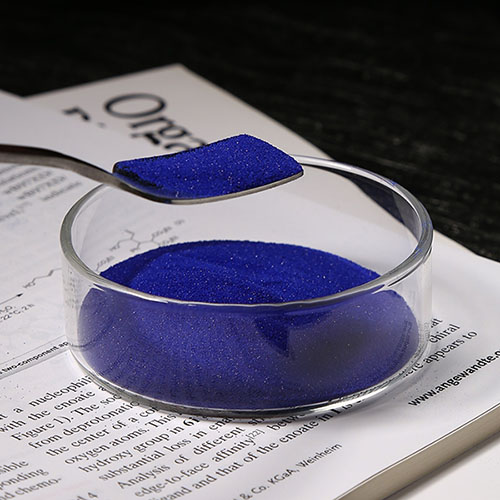
  3. Isolated peptide powderStage 03

    Stage 03

    Isolation & ingredient preparation

    The synthesised peptide is isolated and prepared in the format required for evaluation or formulation.

    The synthesised peptide is isolated as a powder. For GHK-Cu, the peptide binds copper ions to form the characteristic blue copper-peptide complex; our crystal powder has a stated purity above 99%.

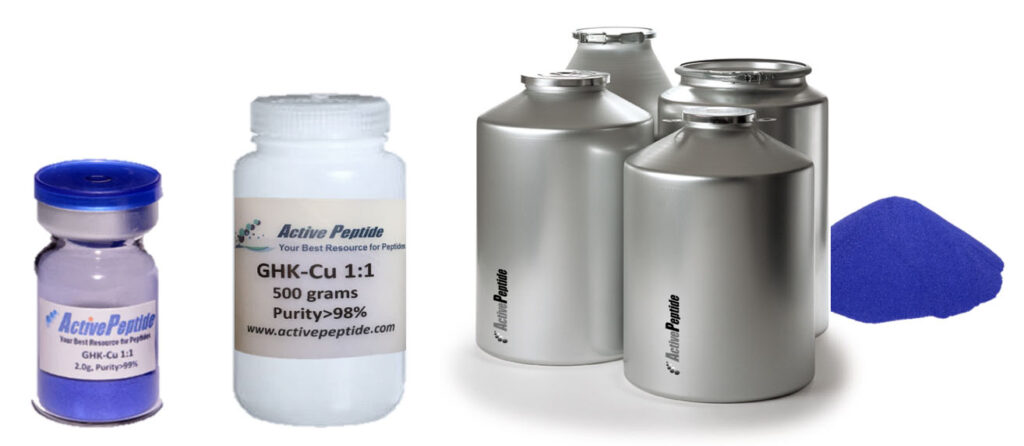
  4. Copper peptide ingredient prepared for quality reviewStage 04

    Stage 04

    Batch quality control

    Each batch is checked against its product specification before release.

    Production takes place in a GMP-standard, sterilised environment. Batch-specific results are recorded in a Certificate of Analysis and supported by the relevant technical documentation.

  5. Peptide formulation work in a laboratoryStage 05

    Stage 05

    Formulation & application

    The ingredient is matched to a suitable concentration, format and incorporation method.

    Powders can be supplied as raw ingredients or made into singular and complex solutions at defined concentrations in ppm. Product-specific use levels, solubility and formulation tips guide incorporation into serums, creams and other cosmetic formats.

  6. Active Peptide production facilityStage 06

    Stage 06

    Documentation & supply

    Samples and production volumes are packed with the information teams need to move forward.

    COA, SDS / MSDS, technical data sheets and formulation tips are available on request, supporting customers from laboratory evaluation through production.

Technology & architecture

Different structures solve different formulation challenges.

Our team develops both the peptide and the route used to make it. Each technology below is clearly identified as an ingredient or a complex used in a reference formulation.

Liquid-phase

A shorter synthesis route in solution, designed without chromatographic purification.

Cyclic & branched

Architectures developed to support stability and performance in cosmetic formulations.

Plant-inspired

Fully synthetic peptide actives inspired by plant-derived structures.

Cyclic architecture

StellaCyclic™

Peptide complex used in reference formulations

A cyclic peptide complex featured in the Flora Brightening Renewal Serum, formulated to reduce the look of wrinkles, brighten the skin and defend the barrier from oxidative stress.

Cyclic architecture

CollaCyclic™

Peptide complex used in reference formulations

A cyclic peptide complex featured in the Skin Quench Barrier Serum, formulated to support skin-barrier repair and collagen production.

Plant-inspired peptide

SpilaLift™

Peptide complex used in reference formulations

A plant-inspired peptide complex with a botox-like effect, featured in the Lifting Mask Serum to tighten and give a lifted look to the skin.

Dendrimer architecture

DendriRegen™

Peptide complex used in reference formulations

A branched dendrimer peptide complex featured in the Clarifying Elixir Serum, formulated for anti-bacterial effects, collagen I and III production and barrier defence.

Dendrimer architecture

DendriAgeX™

Peptide complex used in reference formulations

A branched dendrimer peptide complex featured in the Age-Defy Strengthening Serum, formulated to help firm, lift and reduce UV-induced oxidative stress.

300+
Peptide products
10+
Granted synthesis patents
50+
Researchers
30+
Countries served

Copper peptide science

GHK-Cu, from discovery to formulation.

GHK was first described by Dr. Loren Pickart in 1973 as a tripeptide in human serum. His subsequent research into the GHK-copper complex shaped much of what is known about copper peptides today.

Blue GHK-Cu crystal powder

The discovery story

Interview with Dr. Loren Pickart

In September 2021, Active Peptide co-founder Janet Du interviewed Dr. Loren Pickart, the scientist who discovered GHK, in Seattle. He discusses the history of copper peptide research; the interview is general scientific context, not product-specific clinical testing.

Purity and batch evidence

We produce GHK-Cu with patented liquid-phase synthesis (CN113150066B) as a >99% crystal powder and as solutions from 1,000 to 20,000 ppm. High purity is verified by an American third-party testing company, with batch-specific purity confirmed on each Certificate of Analysis.

Compare our GHK-Cu with other brands

PropertyActive Peptide GHK-Cu powderOther brands
AppearanceCrystal powder, blue, salt-like in consistencyFreeze-dried powder, blue, flour-like in consistency
TechnologyNo preparative HPLC or lyophiliser used; eco-friendlyPreparative HPLC and lyophiliser used; large solvent consumption
StabilityHighLow
Moisture absorptionNoYes
AdhesionNot stickyProne to sticking on bottle wall
StorageEasy to weigh and storeDifficult to weigh and store

Published GHK-Cu studies

Collagen in photoaged skin

Abdulghani et al. established that facial cream containing GHK-Cu increased collagen in photoaged skin in 20 female volunteers, performing better than vitamin C and retinoic acid.

Abdulghani AA, Sherr S, Shirin S, Solodkina G, Tapia EM, Gottlieb AB. Disease Manag Clin Outcomes. 1998;1:136-141.

12-week face and eye cream study

Leyden et al. reported significant improvement of skin laxity, clarity and appearance, skin density and thickness, and reduced fine lines and wrinkles compared with placebo. GHK-Cu eye cream performed better than vitamin K cream.

Leyden J, Stephens T, Finkey MB, Appa Y, Barkovic S. Amer Academy Dermat Meeting, February 2002, Abstract P68, P69.

12-week facial study, 67 women

Finkley et al. reported that GHK-Cu cream applied twice daily improved the appearance of aged skin, increased thickness, reduced wrinkles and stimulated dermal keratinocyte proliferation; the study found GHK-Cu non-toxic and non-irritating.

Finkley MB, Appa Y, Bhandarkar S. Cosmeceuticals and Active Cosmetics, 2nd ed., Marcel Dekker, 2005:549-563.

Published studies of GHK-Cu generally; they are not studies of Active Peptide products. Cosmetic ingredient — not intended to diagnose or treat any condition.

Active Peptide production facility

Manufacturing

We make every peptide we sell.

Active Peptide is a manufacturer, not a distributor. Powders and solutions are produced in our own facilities using patented technology in a GMP-standard environment.

Compared with conventional solid-phase routes, our liquid-phase process is shorter and avoids chromatographic purification, supporting lower solvent use and supply from laboratory samples to production volume.

Quality & compliance

A checked batch, with the documents to support it.

Every product is produced within a GMP-standard, sterilised environment and supplied with product-specific support.

Certificate of Analysis

Batch-specific analytical results against the product specification.

MSDS / SDS

Safety information for handling, storage and transport.

Technical Data Sheet

Product specification, including appearance, purity, solubility and recommended use level.

Formulation guidance

Practical guidance for incorporating the peptide into a formulation.

Sustainability

Cleaner chemistry, built into the route.

01

Shorter synthesis route

Our patented liquid-phase technology shortens the production process.

02

No chromatography

Avoiding chromatographic purification removes a solvent-intensive step.

03

PFAS-free progress

Dozens of leading peptides use neither PFAS in the process nor the finished product.

04

Fully synthetic actives

Our peptides do not involve plant, vegetable, marine or animal sources.

Technical library

Evidence and public records.

Patent register

Patents protect how peptides are made or composed. A patent on its own is not evidence of an ingredient’s efficacy.

Patent numberTitleTerritoryStatusTechnology
CN113150066BCopper Peptide (GHK-Cu) synthesisChinaGrantedLiquid-phase synthesisPublic record ↗
CN111004304BBiotinoyl Tripeptide-1 (Biotin-GHK)ChinaGrantedLiquid-phase synthesisPublic record ↗
CN114702546BTripeptide-29ChinaGrantedLiquid-phase synthesisPublic record ↗
CN113563408BPalmitoyl Tetrapeptide-7ChinaGrantedLiquid-phase synthesisPublic record ↗
CN117069795BAcetyl Dipeptide-91 (NuroPep-91)ChinaGrantedPeptide ingredientPublic record ↗
CN112830956BExtensive Anti-Wrinkle Essential Peptide SolutionChinaGrantedComplex solutionPublic record ↗

Scientific publications

Third-party, peer-reviewed literature on GHK and GHK-Cu.

  1. 1973Tripeptide in human serum which prolongs survival of normal liver cells and stimulates growth in neoplastic liverPickart L, Thaler MM. Nat New Biol. 1973;243(124):85–87. · Related: GHK discovery
  2. 2015GHK Peptide as a Natural Modulator of Multiple Cellular Pathways in Skin RegenerationPickart L, Vasquez-Soltero JM, Margolina A. Biomed Res Int. 2015;2015:648108. · Related: GHK-Cu
  3. 2018Regenerative and Protective Actions of the GHK-Cu Peptide in the Light of the New Gene DataPickart L, Margolina A. Int J Mol Sci. 2018;19(7):1987. · Related: GHK-Cu

These studies concern GHK and GHK-Cu generally; they are not studies of Active Peptide products.

Ready to move from research to formulation?